How School Essentials Help Build Skills That Last Beyond the Classroom
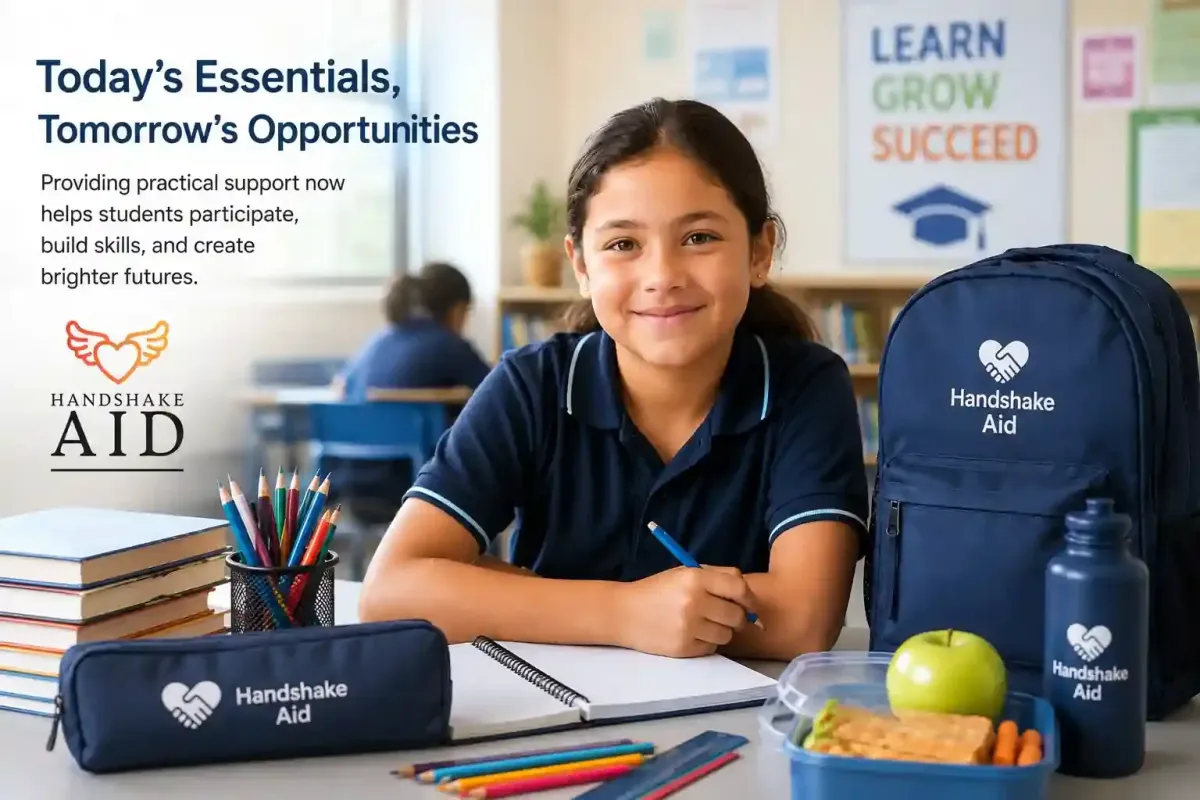
Learning depends on more than what is written on a classroom whiteboard. A student needs the practical means to participate: appropriate clothing, stationery, access to technology and enough food to remain focused throughout the day. When those basics are uncertain, education can become harder for reasons that have little to do with ability or effort.
Handshake Aid supports vulnerable public school students in Australia by helping provide these everyday essentials. While the immediate purpose is practical, there is a wider educational consequence worth considering. Regular participation in school gives young people opportunities to develop skills that will matter long after their final lesson.
Participation is where many skills begin
Schools teach literacy, numeracy and subject knowledge, but much of a child's development also happens through participation. Students learn to communicate with classmates, work through disagreements, organise tasks, meet deadlines, ask questions and contribute to group activities.
These experiences can be interrupted when basic needs are not met. A student without suitable stationery may be unable to complete an activity properly. Limited access to a computer can affect homework and digital learning. Hunger can make concentration difficult. A missing uniform may create embarrassment or discourage participation altogether.
Providing an essential item does not directly teach teamwork or communication. What it can do is remove a barrier that prevents a student from being present and involved.
That difference is important. Skills develop through repetition. A child becomes more comfortable speaking in a group by having opportunities to speak. Organisation improves through repeatedly managing assignments and deadlines. Problem-solving develops through encountering problems and being given the space to work through them.
Consistent participation gives those experiences time to accumulate.
Skills continue developing throughout working life
The abilities first practised at school do not remain fixed once someone enters employment. Communication, confidence, organisation and leadership continue to develop as responsibilities change.
Australia's employment and career-development sector reflects this continuing process. The Acorn Group, for example, works across recruitment, career development, mentoring and areas including leadership development programmes. Its work concerns adults and workplaces rather than school students, but it illustrates a straightforward point about skills: development continues across different stages of a person's working life.
School is one of the earliest structured environments in which that development occurs.
A classroom presentation may be a student's first experience of explaining an idea to a group. A shared assignment introduces cooperation and responsibility. Following instructions, managing time and completing work all contribute to habits that can later become relevant in workplaces.
It would be an exaggeration to suggest that providing a backpack or laptop creates those capabilities. The connection is more practical. Removing material obstacles helps students participate in the environments where capabilities can be practised.
Opportunity needs practical foundations
Discussions about education often focus on ambition: encouraging children to aim higher, work hard and imagine what they might become. Ambition matters, but encouragement alone cannot supply the practical resources needed to participate fully in school.
A student needs somewhere to write. Digital assignments require access to technology. Concentration is easier when a child has eaten. Participating comfortably in the school community can depend on having appropriate clothing and equipment.
These are ordinary things, which is precisely why their absence can be so disruptive.
Supporting access to essentials does not determine what career a child will eventually pursue, nor does it guarantee a particular educational outcome. It does something more immediate and measurable: it helps reduce obstacles between the student and the opportunities already available at school.
Over years of education, those opportunities matter. Lessons, conversations, assignments, mistakes, friendships and responsibilities all contribute to development.
Helping a young person take part consistently gives them more chances to learn from those experiences. The essentials themselves may eventually wear out or be replaced. The skills developed while using them can travel much further.
