Why Access to Education Matters for Developing Communication Skills
Learning to communicate effectively begins long before a young person enters the workplace. Classroom discussions, group assignments, reading activities and everyday interactions with teachers and classmates all provide opportunities to develop skills that remain relevant throughout adulthood.
However, meaningful participation in these activities depends partly on access to educational resources. Students experiencing financial hardship may face practical barriers that limit their opportunities to practise, express ideas and engage with others. Addressing these barriers is therefore relevant not only to academic learning but also to the development of transferable skills.
Communication Skills Develop Through Everyday School Experiences
Communication involves more than speaking clearly. It includes listening, interpreting information, expressing ideas, asking questions, understanding different perspectives and adapting messages to different audiences.
Schools provide numerous opportunities to practise these abilities through ordinary learning activities.
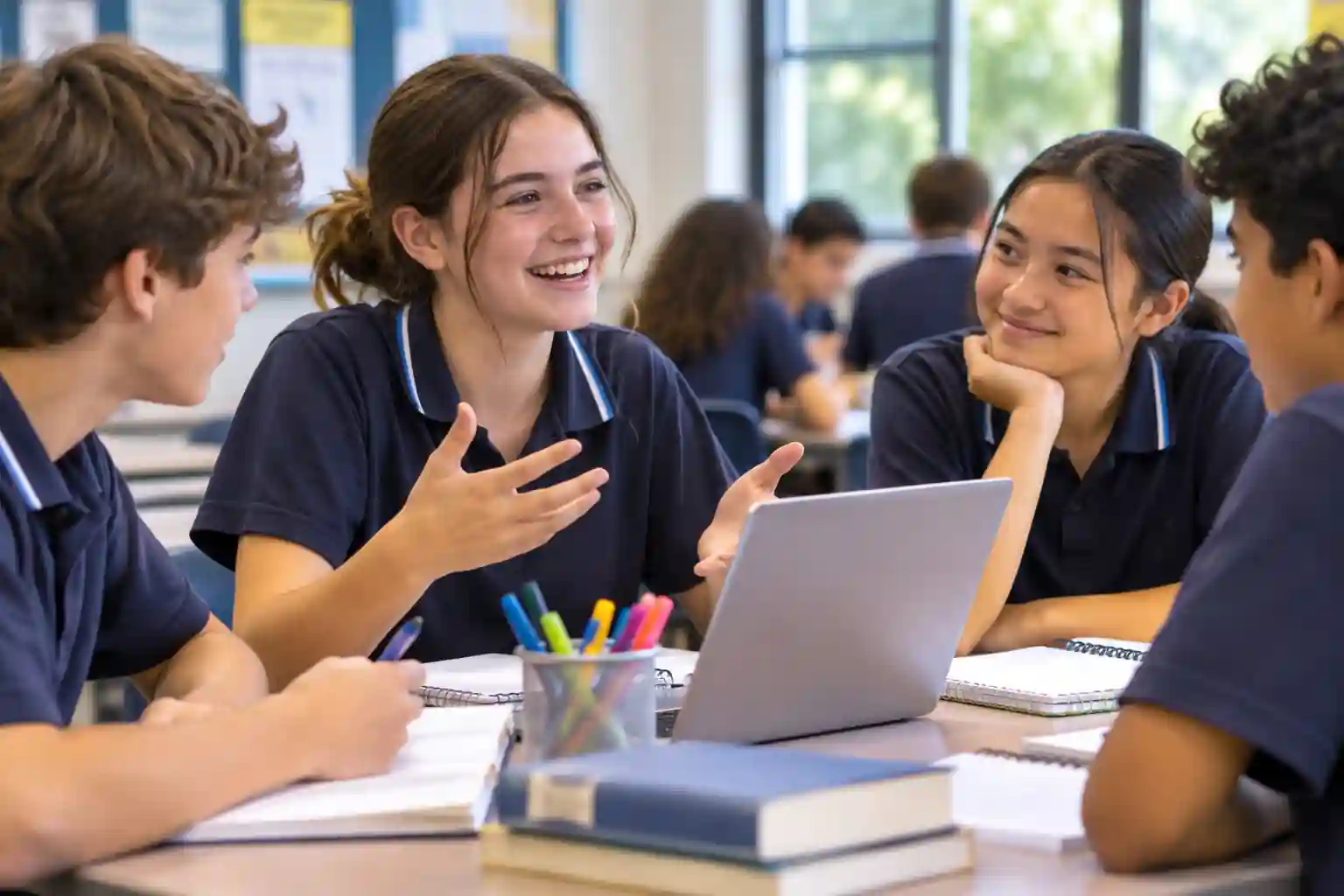
A classroom discussion encourages students to organise their thoughts and explain their reasoning. Group assignments require negotiation, cooperation and shared decision-making. Written assessments provide opportunities to communicate complex information in a structured way.
Even informal conversations during school activities allow students to practise listening, responding and navigating disagreements.
These experiences are valuable because communication is a practical ability developed through repeated opportunities rather than theoretical instruction alone.
Students may demonstrate their abilities in different ways. A child who speaks less frequently in classroom discussions may communicate effectively through writing, creative activities or smaller group interactions. Educational environments that recognise these differences can provide a wider range of opportunities for participation.
How Limited Educational Resources Can Affect Participation
Educational accessibility refers to the extent to which students can access and participate in learning opportunities regardless of their financial circumstances, location or individual needs.
Although communication activities may appear to require few resources, participation can depend on access to everyday educational essentials.
Consider a hypothetical student completing a group presentation that requires online research, preparation at home and access to presentation software. Limited access to a suitable device or reliable internet connection may restrict the student's ability to contribute outside classroom hours.
Similarly, insufficient stationery or learning materials may create difficulties when completing written assignments or preparing classroom activities.
These circumstances do not indicate a lack of ability, motivation or interest. They reflect differences in the resources available to individual students.
Through its focus on supporting students with essential educational resources, Handshake Aid addresses practical barriers that may otherwise restrict participation in school life.
Providing resources can make particular learning activities more accessible. Whether this leads to improved communication abilities or academic achievement depends on additional factors, including teaching practices, individual circumstances and ongoing support.
From Classroom Learning to Professional Communication
Transferable skills are abilities that can be applied across different environments, responsibilities and stages of life. Communication, collaboration, problem-solving and critical thinking are common examples.
Many everyday school activities introduce students to communication challenges that have parallels in adult working environments.
Explaining the findings of a research assignment, for instance, involves selecting relevant information and presenting it in a way that others can understand. These same principles apply when adults prepare workplace reports, explain procedures or communicate with customers.
In public-facing professions such as journalism, marketing and public relations, communication and influence skills have practical applications in conveying information, understanding audiences and developing clear messages. Professional communication may also involve adapting language for different media while maintaining accuracy and consistency.
The purpose and complexity of these activities differ considerably from school-based learning. Nevertheless, both involve understanding what needs to be communicated, who needs the information and how it can be expressed clearly.
This connection illustrates why opportunities to develop communication abilities throughout education are relevant beyond academic assessments, without suggesting that school participation alone guarantees future employment.
Creating More Inclusive Opportunities for Students to Communicate
Educational participation should not depend entirely on a student's ability to purchase resources, access technology at home or participate in activities outside school hours.
Schools and community organisations can consider several practical approaches when identifying barriers to communication-based learning:
Providing access to shared technology and learning materials.
Designing group activities that do not depend on additional household expenditure.
Offering different ways for students to demonstrate their understanding.
Creating opportunities for participation through written, spoken and visual communication.
Providing discreet assistance when students require additional resources.
The way support is delivered also matters. Assistance that unnecessarily identifies a student's financial circumstances may create discomfort or discourage participation.
Where possible, educational support should preserve privacy and allow students to participate alongside their classmates without being singled out.
Inclusive learning environments recognise that students bring different experiences, strengths and communication preferences to the classroom. Providing flexibility does not necessarily mean reducing educational expectations; it can mean offering different ways to engage with the same learning objectives.
Educational Access Is a Foundation, Not a Guaranteed Outcome
Developing communication skills is a gradual process influenced by educational experiences, family circumstances, individual interests and opportunities for continued practice.
Access to school supplies, technology and other essentials can remove specific obstacles, but it cannot independently determine how a student develops or what opportunities become available in adulthood.
The distinction matters when considering the long-term value of educational support. Providing a student with the resources needed to participate in a classroom activity is a meaningful intervention in itself, even when its future effects cannot yet be measured.
Educational accessibility is therefore about creating fairer conditions for participation. When practical barriers are reduced, students have more opportunities to engage with learning, express their understanding and develop abilities that may remain useful throughout their lives.
